In a world where your favorite tunes can fit in your pocket, it’s hard to imagine a time without music at your fingertips. But what happens when you’ve got an MP3 file that just won’t play on your iPhone? Panic sets in, and suddenly that catchy tune feels like a distant memory. Fear not, music lover! Opening MP3 files on your iPhone is easier than finding a cat video online.
Overview of MP3 Files
MP3 files represent a widely used digital audio format known for their ability to compress sound data without significantly sacrificing quality. This format serves various purposes, including music distribution, podcast hosting, and audiobooks. Users appreciate MP3 files for their efficient storage capabilities.
Different devices, including iPhones, support MP3 playback, ensuring access to a vast library of audio content. It’s important to note that compatibility issues may arise with certain file types or audio codecs. Many iPhone users may experience frustration when attempting to play unsupported formats, highlighting the importance of utilizing MP3 files.
Audio streaming platforms commonly feature MP3 files, allowing users to download or stream their favorite tracks seamlessly. High-quality versions of these files provide a richer sound experience, making them the preferred choice for audiophiles.
In addition, MP3 files are easily shareable, enabling seamless transfers between devices. Most email services and cloud storage options support these audio formats, simplifying the sharing experience.
While MP3 remains dominant, other formats like AAC and WAV also exist in the market, each serving unique needs. Users may choose between these formats based on their specific requirements for audio fidelity or file size. Understanding MP3 files and their advantages can help users get the most out of their iPhone’s music capabilities.
Methods to Open MP3 on iPhone
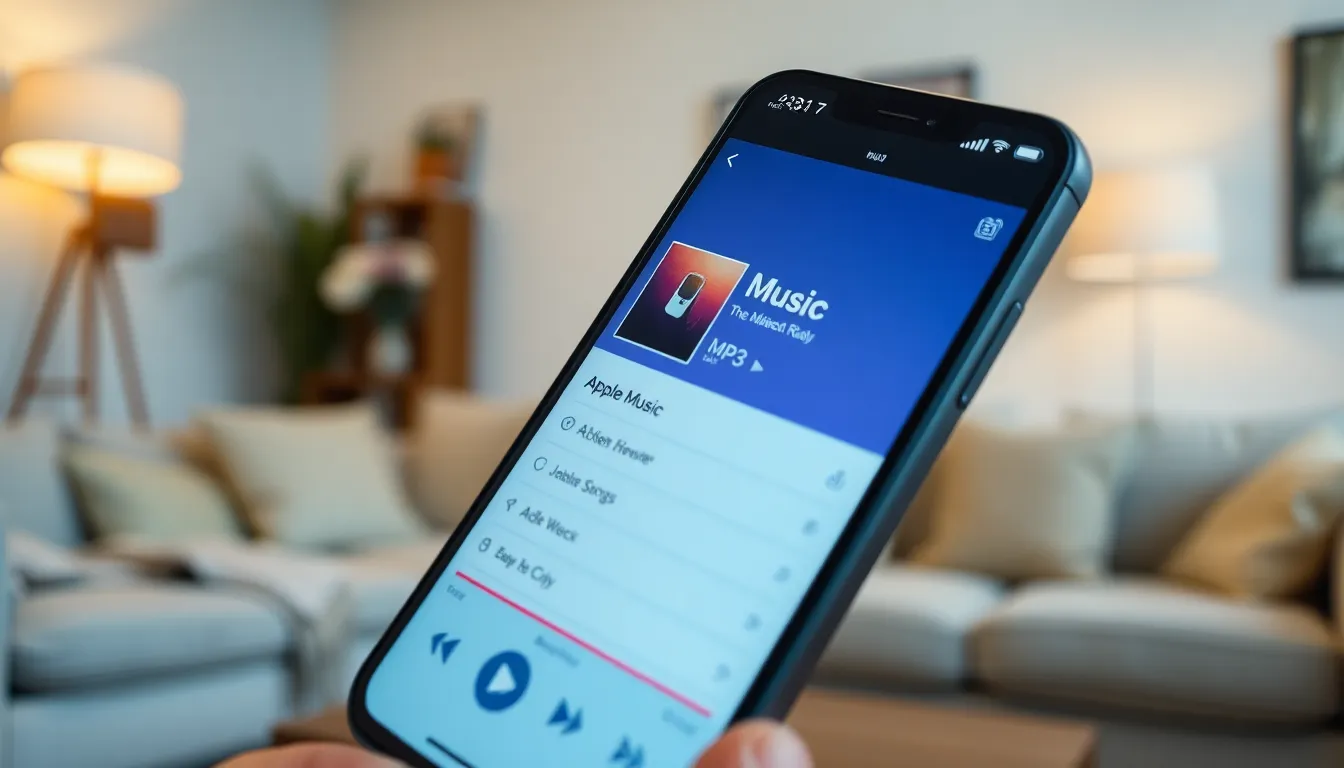
Several methods efficiently open MP3 files on an iPhone. Users can choose between built-in applications or various third-party options.
Using the Apple Music App
The Apple Music app provides a straightforward way to access MP3 files. Users can add MP3s to their music library via iTunes on a computer. Once synced, tracks appear seamlessly within the app. Apple Music also allows users to play songs directly from the Files app, ensuring a smooth listening experience. Opening MP3 files in this manner avoids compatibility issues.
Using Third-Party Apps
Multiple third-party apps exist for playing MP3 files on an iPhone. VLC for Mobile stands out as a popular choice, supporting various audio formats. Users can download the app from the App Store for free. Another good option is Documents by Readdle, which lets users manage and play music files effortlessly. These apps not only enhance compatibility but also offer user-friendly interfaces. Exploring these tools opens a world of audio possibilities on the iPhone.
Transferring MP3 Files to iPhone
Transferring MP3 files to an iPhone can be done efficiently through various methods. Below are two common approaches that enable a seamless experience.
Using iTunes
iTunes allows users to sync MP3 files directly to their iPhones. Connecting the iPhone to a computer with iTunes installed is the first step. Afterward, users can add MP3 files to their iTunes library by dragging and dropping them. Ensuring that the iPhone is selected in iTunes leads to the option to sync music. Once the sync option is activated, the chosen MP3 files will transfer to the iPhone music library automatically. Regular syncing keeps the library up-to-date with new music, providing easy access to the latest tracks.
Using Cloud Services
Cloud services offer an alternative way to transfer MP3 files. Users can upload their MP3 files to platforms such as iCloud Drive, Google Drive, or Dropbox. Once uploaded, accessing these files on the iPhone is straightforward. Downloading the respective cloud app enables retrieval of the MP3 files stored in the cloud. After the files are downloaded to the device, they can be played using any compatible music player app installed on the iPhone. This method provides flexibility in managing music libraries while keeping device storage optimized.
Troubleshooting Common Issues
Users often encounter problems when trying to open MP3 files on their iPhones. Checking file formats ensures compatibility with Apple Music. If the file format isn’t supported, converting MP3 files to a compatible format helps.
A frequent issue involves missing tracks after syncing with iTunes. Confirming the music library in iTunes includes the desired MP3 files is vital. Activating the sync option guarantees that the latest files transfer to the iPhone.
Another common problem is playback errors. Restarting the Apple Music app can resolve many minor issues. If playback continues to fail, restarting the iPhone often provides a quick fix.
Users might face challenges with third-party apps when playing MP3 files. Ensuring that these applications are updated maintains optimal performance and compatibility. Verifying the app’s settings can also improve file accessibility.
For those using cloud services to transfer files, poor internet connectivity might hinder access to MP3 files. Checking the Wi-Fi connection strengthens the ability to download or stream files from services like iCloud Drive or Google Drive.
In situations where audio quality declines, verifying the original MP3 file’s integrity can help. Corrupted files often lead to playback issues. If problems persist, re-downloading the MP3 file from a trusted source usually resolves the matter.
By addressing these common issues proactively, users enhance their experience listening to music on their iPhones.
Opening MP3 files on an iPhone doesn’t have to be a hassle. With the right methods and tools, users can easily enjoy their favorite music without compatibility issues. By leveraging the Apple Music app or popular third-party applications, they can manage their MP3 libraries effectively.
Transferring files through iTunes or cloud services offers flexibility and convenience, ensuring that music is always accessible. Troubleshooting common issues like playback errors or syncing problems can further enhance the listening experience. With these strategies in hand, users can confidently navigate their music collections and enjoy seamless audio playback on their iPhones.