When it comes to smartphones, Apple fans often find themselves in a heated debate: iPhone 11 or iPhone 13? It’s like choosing between pizza and tacos—both are delicious, but one might just have that extra zing. With each new release, Apple packs in features that could make even the most loyal iPhone 11 user raise an eyebrow.
In this showdown, we’ll break down the differences between these two models. From camera upgrades that’ll make your selfies pop to battery life that could outlast a Netflix binge, the iPhone 13 brings some serious tech to the table. So grab your popcorn and get ready to discover if the iPhone 13 is worth the upgrade or if the trusty iPhone 11 still reigns supreme in the world of smartphones.
Overview of iPhone Models
iPhone 11 debuted in September 2019, featuring a 6.1-inch Liquid Retina display and dual 12 MP rear cameras. It also introduced Night mode and 4K video recording capabilities, enhancing photography experiences. This model uses the A13 Bionic chip, providing adequate performance for most tasks.
In contrast, iPhone 13 launched in September 2021, building upon the success of its predecessor. It offers a brighter Super Retina XDR display with improved color accuracy. Notably, the iPhone 13 employs the A15 Bionic chip, optimizing speed and efficiency in demanding applications.
Camera enhancements distinguish the iPhone 13 from the iPhone 11. While both models feature dual 12 MP cameras, iPhone 13 includes sensor-shift optical image stabilization, improving low-light performance. Additionally, the Photographic Styles and Cinematic mode enhances video recording, providing professional-quality content creation.
Battery life marks another significant difference between the models. iPhone 11 offers up to 17 hours of video playback, while iPhone 13 extends this to 19 hours. Users benefit from longer usage without needing frequent recharges on the newer model.
Storage options for both devices vary, with iPhone 11 offering 64 GB, 128 GB, and 256 GB. iPhone 13 expands storage choices, including 128 GB, 256 GB, and a larger 512 GB option. This flexibility caters to users with varying storage needs.
Color choices also differ between the two models. iPhone 11 features six color options, whereas iPhone 13 offers five unique colors, appealing to individual preferences. Thus, both models present compelling choices, yet the upgrades in iPhone 13 enhance overall functionality and user experience.
Design Differences
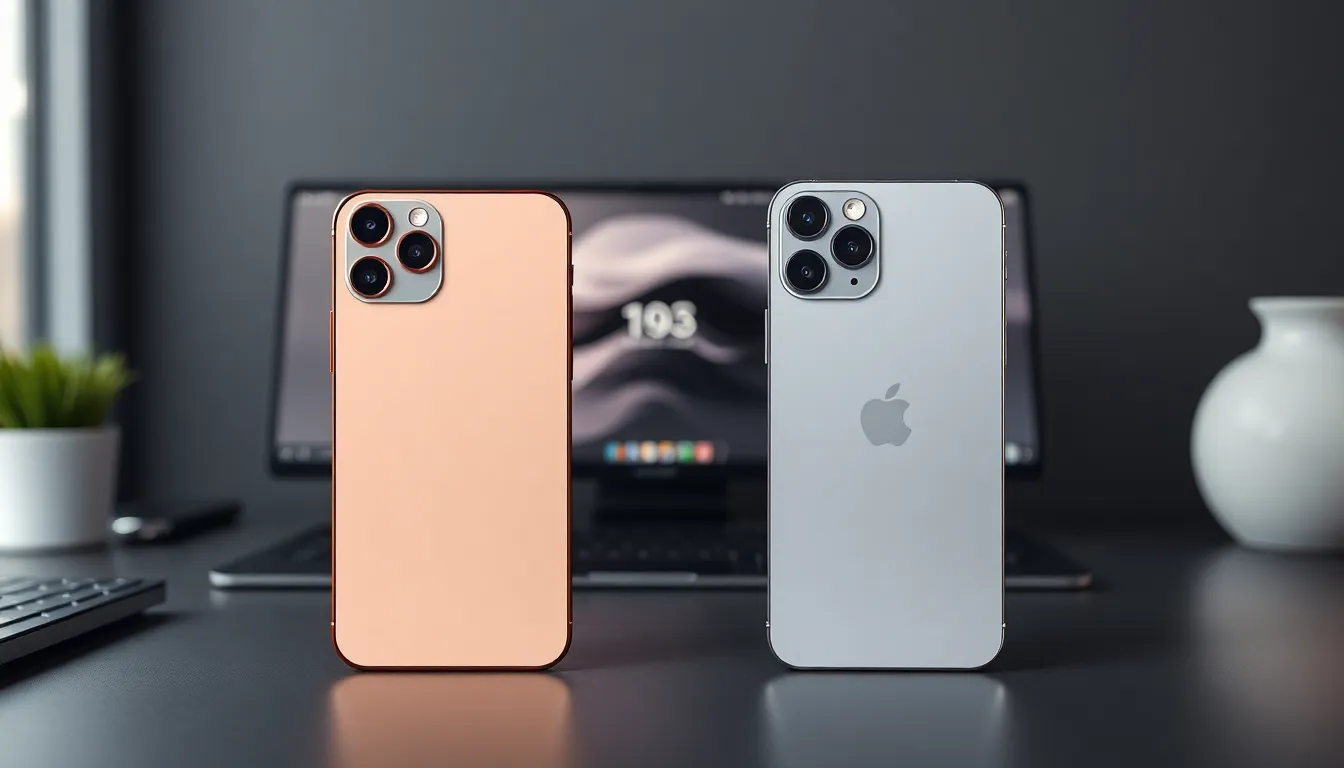
Both the iPhone 11 and iPhone 13 showcase distinct design features that appeal to different user preferences.
iPhone 11 Aesthetics
The iPhone 11 features a glass and aluminum design that offers a modern yet classic look. Its dimensions measure 150.9 x 75.7 x 8.3 mm, providing a comfortable grip. Weighing 194 grams, the iPhone 11 is relatively lightweight, enhancing portability. Its 6.1-inch Liquid Retina display delivers vibrant colors and true-to-life visuals. Available in six colors, including purple and green, the iPhone 11 attracts various tastes. The camera layout consists of dual 12 MP rear cameras positioned in a square module, contributing to the device’s distinctive appearance.
iPhone 13 Aesthetics
In contrast, the iPhone 13 boasts a sleeker design with slightly smaller dimensions of 146.7 x 71.5 x 7.65 mm. Weighing 174 grams, it offers better handling and feels lighter in hand. The 6.1-inch Super Retina XDR display not only presents brighter colors but also supports HDR content. The camera system inherits the dual 12 MP setup but shifts to a diagonal layout, enhancing its modern aesthetics. Available in five colors such as starlight and midnight, the iPhone 13 visually appeals to users seeking a fresh look. Overall, the design elevates its premium feel, making it attractive for contemporary smartphone users.
Performance Comparison
Performance sets the iPhone 11 and iPhone 13 apart. The iPhone 13 leverages the A15 Bionic chip, providing users with faster processing power and enhanced graphics performance compared to the A13 Bionic chip in the iPhone 11. The A15 offers advanced machine learning capabilities, resulting in smoother app experiences and improved gameplay.
Battery life marks another critical differentiation. Users enjoy up to 19 hours of video playback on the iPhone 13, surpassing the iPhone 11’s 17 hours. Enhanced efficiency in the A15 Bionic chip contributes to this improvement, allowing for longer usage without frequent charging. Such advancements cater well to heavy users who rely on their devices throughout the day, ensuring functionality remains consistent even during intense activities.
Camera Capabilities
Camera capabilities significantly influence the choice between the iPhone 11 and iPhone 13. These models offer distinct features designed to enhance photography and videography experiences.
iPhone 11 Camera Features
The iPhone 11 includes dual 12 MP rear cameras with ultra-wide and wide lenses. Night mode allows users to capture clearer images in low-light environments. 4K video recording supports multiple frame rates, ensuring smooth motion. Smart HDR enhances image quality by adjusting highlights and shadows automatically. Portrait mode creates stunning depth-of-field effects, making subjects stand out against their backgrounds.
iPhone 13 Camera Features
The iPhone 13 upgrades camera capabilities with sensor-shift optical image stabilization, improving low-light performance. Enhanced computational photography features utilize the A15 Bionic chip for superior image processing. Cinematic mode allows for adjustable depth-of-field effects in videos, resulting in a professional look. Dual 12 MP cameras provide excellent ultra-wide and wide shots, while improved Night mode delivers brighter images. Photographic Styles allow users to customize their photography preferences for a unique aesthetic.
Display Technology
Display technology showcases key differences between the iPhone 11 and iPhone 13 models. These variations significantly impact user experience and functionality.
Screen Quality and Size
The iPhone 11 features a 6.1-inch Liquid Retina display with a resolution of 1792 x 828 pixels. This display offers decent clarity and color reproduction. In contrast, the iPhone 13 uses a 6.1-inch Super Retina XDR display, boasting a higher resolution of 2532 x 1170 pixels. Users benefit from OLED technology in the iPhone 13, which enhances contrast and allows for deeper blacks. This advancement makes graphics and videos appear more vibrant. Both models maintain a similar size, but the iPhone 13 provides a superior viewing experience due to its advanced screen quality.
Brightness and Color Accuracy
Brightness levels differ significantly between these two iPhones. The iPhone 11’s peak brightness reaches 625 nits, which is sufficient for most indoor usage. On the other hand, the iPhone 13 features a peak brightness of 800 nits for standard viewing and up to 1200 nits for HDR content. This improvement allows users to enjoy content even in bright sunlight. Color accuracy is another notable distinction; the iPhone 13 offers a wider color gamut and improved color fidelity. Enhanced color accuracy results in more true-to-life images and videos, greatly benefitting photographers and videographers.
Pricing and Availability
Pricing for the iPhone 11 starts at approximately $499 for the base model with 64 GB of storage. The price fluctuates for higher storage options, reaching around $599 for the 128 GB variant and $699 for 256 GB. Availability may vary, as the iPhone 11 is often found through authorized retailers, carrier outlets, and Apple’s official website.
In comparison, the iPhone 13 has a starting price of around $799 for the entry-level 128 GB model. Buyers can choose the 256 GB option for about $899, while the top-tier 512 GB storage variant is priced at $1,099. This higher pricing reflects its advanced features and technology, which distinguishes it in the market.
Availability of the iPhone 13 aligns closely with Apple’s release strategy, generally available through authorized retailers and directly from Apple. Both models are commonly found on various carrier plans, offering users the flexibility to select payment options best suited for their budgets.
Examining demand, the iPhone 13 has seen significant popularity, leading to occasional inventory shortages. Stock levels for the iPhone 11 remain stable, as it appeals to budget-conscious consumers seeking reliable performance without the latest features. Buyers interested in either model should assess local retailers or Apple’s online store for current availability.
Consideration of used or refurbished options may also yield lower prices for both models, providing a cost-effective pathway for consumers. Overall, pricing and availability reflect the differences in technology and consumer preferences between the iPhone 11 and iPhone 13.
Choosing between the iPhone 11 and iPhone 13 ultimately depends on individual needs and preferences. The iPhone 13 clearly stands out with its enhanced performance and advanced camera features. For those who prioritize superior display quality and longer battery life the iPhone 13 is a compelling choice.
However the iPhone 11 still holds its ground as a reliable option for users who seek solid performance without the latest upgrades. Its affordability makes it an attractive alternative for budget-conscious consumers. Both models cater to different segments of the market ensuring that there’s a suitable choice for everyone.